



Article: Handcrafted vs. industrial sandals: what are the differences in quality?
Handcrafted vs. industrial sandals: what are the differences in quality?
Imagine two pairs of leather sandals sitting side by side. Same color, same silhouette, same promise of summer. One costs €29, the other €120.
So, what justifies the difference? Many things, and not just the ones you might think.
Follow us; we’re taking you to Michoacán.
A craft no one can automate
The huarache was born several centuries ago in Mexico, in the state of Michoacán. Its signature: fine leather strips braided by hand.
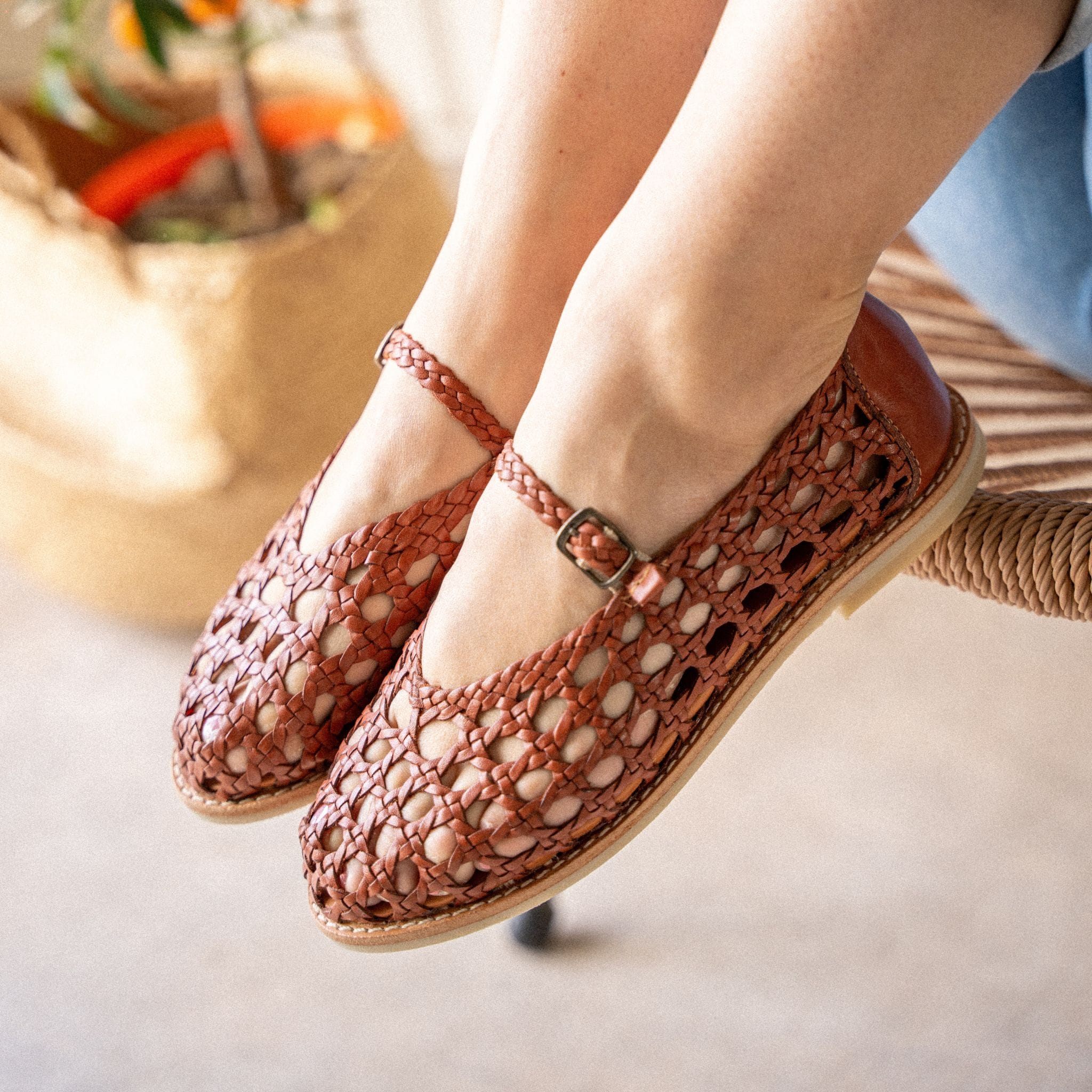
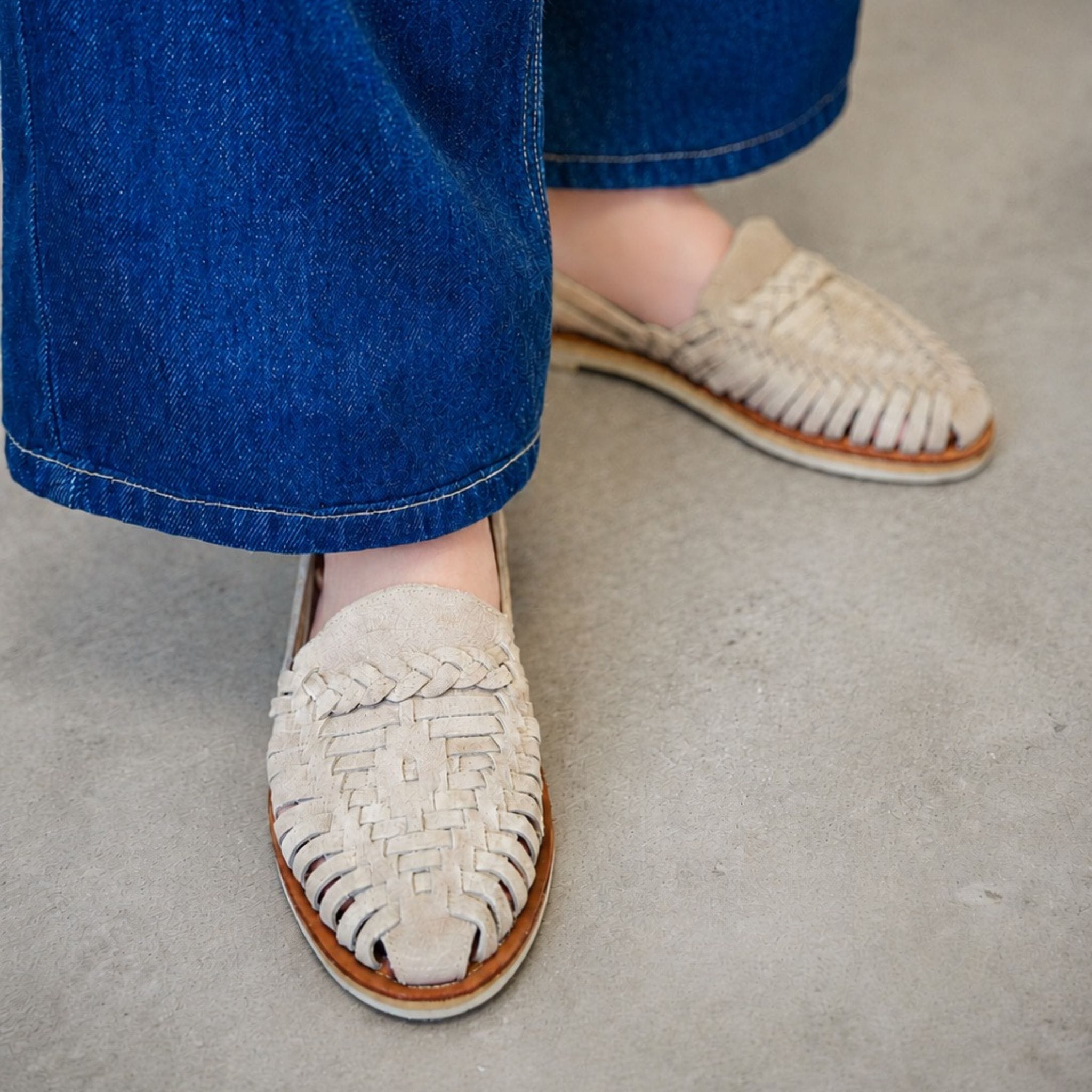
The strips are slipped into the shoe one by one, then braided directly onto it, strand by strand. That is where the challenge lies: tension is adjusted by touch. Too loose, and the sandal gapes. Too tight, and it causes blisters. No machine can do this; it takes years of practice.
The leather is then dampened, hammered, and dried for several hours so it perfectly takes the shape. And then the assembly process begins again.
In total: nearly 16 hours of work for a single pair. An industrial sandal comes off a production line in a few minutes. That is the essence of the price gap. Not a mysterious margin: human time, paid for.
Our artisans do, of course, use tools. Craftsmanship has never meant the absence of machines; it is a human presence: a factory may have the same presses, but in the workshop, no one but the artisan decides the tension of a braid.

And that is what makes your pair unique. A manual process always produces tiny variations, so no two pairs are exactly identical. Yours will not be a perfect copy of the photo, and that is precisely what makes them one-of-a-kind.
An industrial “braided-look” sandal, on the other hand, is often just a piece of leather cut to imitate a braid. Turn it over: the pattern stops where the leather is glued.
Behind every pair, names
An industrial sandal has no one behind it. A huarache does.
Mapache works with 4 manufacturing workshops in Mexico, representing over 70 artisans. The braiding is passed down from mother to daughter, and some of our artisans do their work from home, which allows them to stay with their families.

We also made a choice that is rarely talked about: this trade was once very seasonal. By producing all year round, we have made it sustainable and offer our artisans much better stability.
Want to know who is behind your pairs? Meet Elizabeth, one of our artisans from Michoacán.

We know where our leather comes from
It is our raw material, so we took the time to become experts in it. We work with several Mexican tanneries, chosen one by one, and we know exactly what each one provides us.
For example: traditional huarache leather is thick and rigid—perfect for molding to a last, but too stiff for our closed-toe models. For those, we choose a softer leather produced by tanneries equipped to treat their wastewater.
Choosing the right leather for the right model rather than one leather for everything is what a small company that knows its suppliers by name can do.
The same logic applies to the soles. While many industrial models rely on injected foam—very comfortable at the first try-on but flattened within a season—our soles are made of leather, crepe (a flexible, grippy rubber), or recycled tires, just like the original huaraches.
And everything is written on each product page, material by material.
Artisanal does not mean outdated
This is the misconception that amuses us the most. In the collective imagination, "handmade" rhymes with beige sandals, one-off styles, and timeless cuts (read: a bit sad).
For us, it is the opposite. This close relationship with our tanneries allows us to develop our own leathers and colors, season after season: smooth leathers or suede, from the softest shades to the most daring. A brand that buys standard stock takes what it is offered. We create the color.
As for models, craftsmanship has never held anyone back. The Pia ballet flat is the best example: a trendy silhouette, wearable all year round, braided using the same ancestral technique. Our mules, sandals, and capsule collections follow the same logic, with a new collection every year.

And it shows: our customers regularly tell us that they get compliments on their Mapaches. It is hard to say the same for a model you see on three other pairs of feet every day.
And after a few weeks?
That is where it all happens, and no product photo can help you there.
An industrial sandal is at its best the day you buy it. Afterward, it deteriorates.
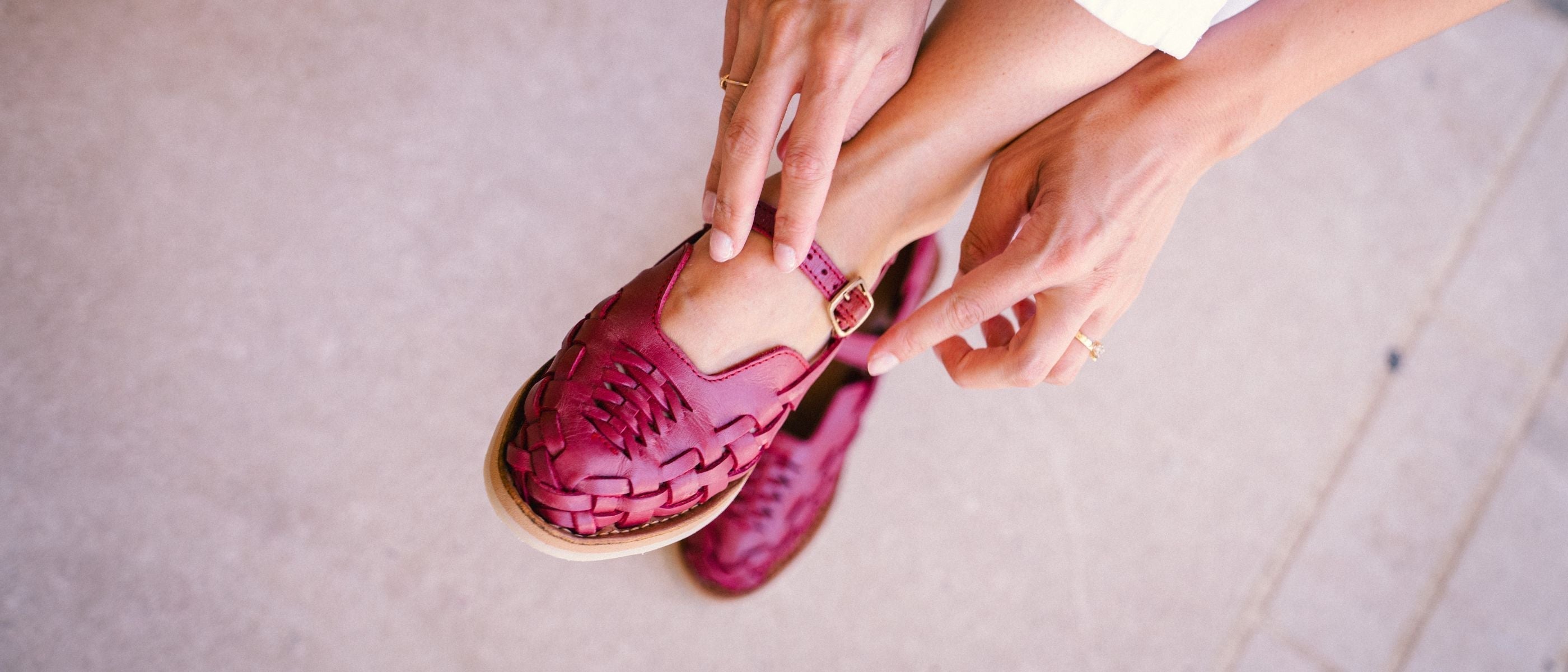
A hand-braided sandal is the opposite. The braided leather sits directly against the skin, without a lining: it softens as you wear it and ends up molding to your foot. It doesn't get worn out; it becomes yours.
A customer says it better than we do: "The first time you put them on they feel tight, and actually the leather perfectly molds to your foot right away."
(This is perfectly normal, and it is also why our size guide advises you based on the shape of your foot.)
After that, they last. A crepe or recycled tire sole does not collapse like injected foam, and leather that is regularly nourished survives through the seasons. That is why we offer care products and replacement half-soles: we prefer to help you keep your pairs rather than replace them.
Some of our customers are still wearing pairs bought several years ago:

“The quality is always there. The comfort is unparalleled. I don’t regret any of my purchases. I have a pair of sandals that is several years old and they are in perfect condition.”
That is where ecology enters the story, and not as a checkbox. A pair you keep for three or four summers means two or three pairs you did not buy.
A shoe designed to last costs more once. A shoe designed to be replaced costs less, but every single year.
Your 3 questions before you buy
Wherever you shop, ask them. They are enough.
- Is the composition detailed, material by material? Upper, lining, insole, outsole. A brand that knows what it sells writes it in black and white, without hiding behind a vague "other materials."
- Do we know who makes it, and where? A country, workshops, ideally faces and names.
- Does the brand help you make your pair last? Care tips, appropriate products, replacement half-soles. A brand that lives off renewal has no interest in you keeping your shoes for a long time.
An artisanal brand answers all three. A brand that dodges them has already given you its answer.
At Mapache
Since 2015, our huaraches, sandals, mules, and ballet flats have been braided by hand in Michoacán by artisans we know and pay fairly. We choose our leathers tannery by tannery and we create our colors with them.
For us, craftsmanship is not an archival image. It is what makes each pair traditional, unique, and perfectly wearable today.
Discover our artisanal footwear →
Already own a pair? Share your experience, good or otherwise, on our Trustpilot page. It helps others make their choice.
And to follow the behind-the-scenes of the workshop, see you on Instagram!
